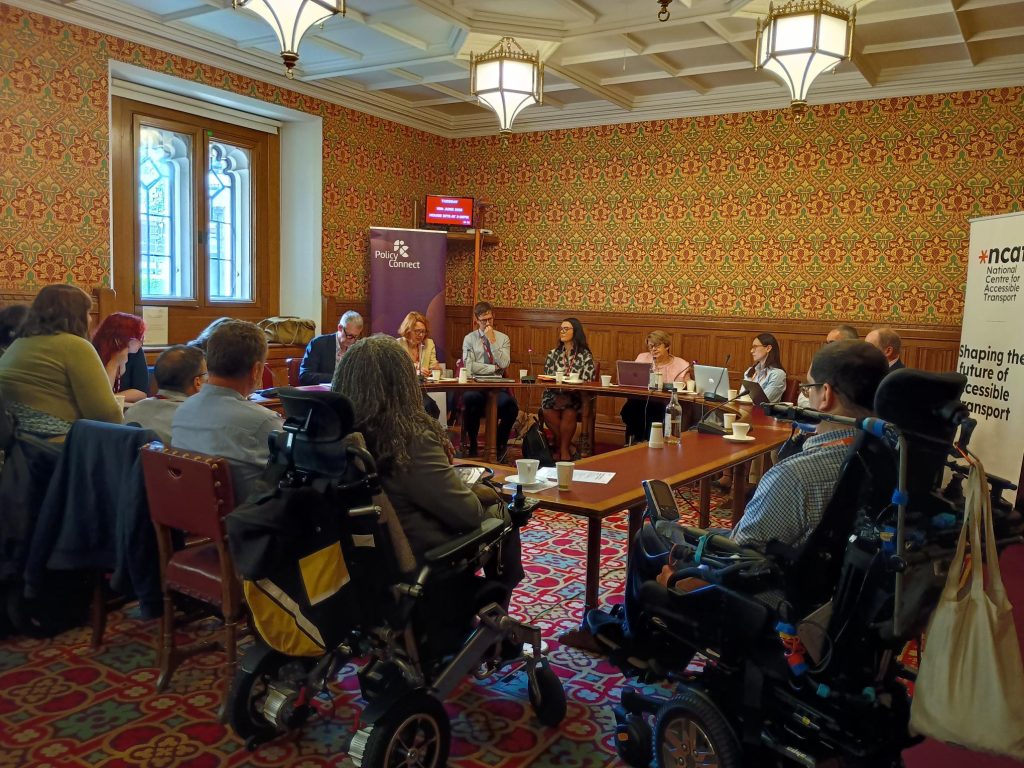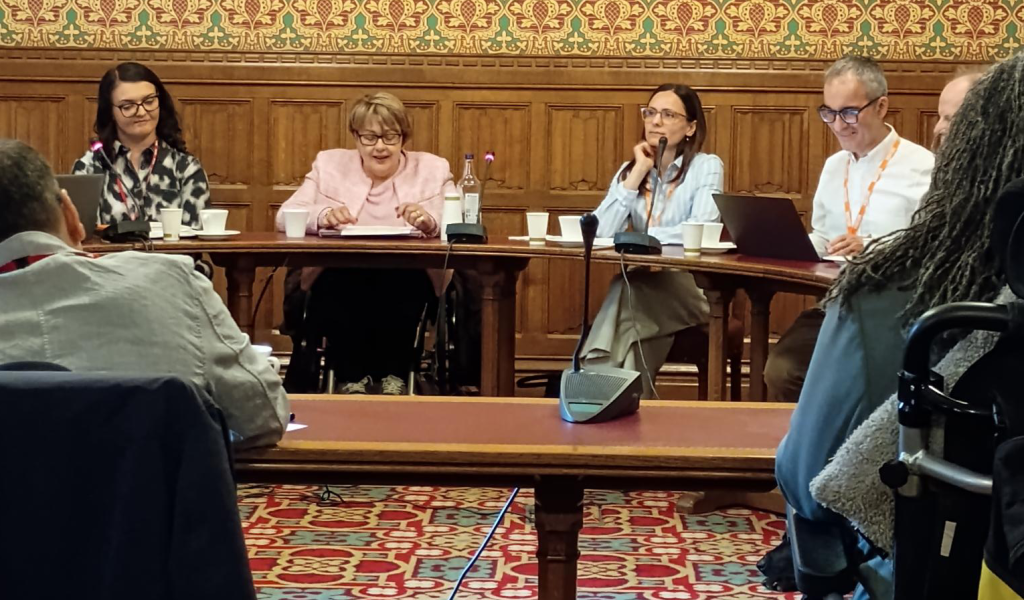
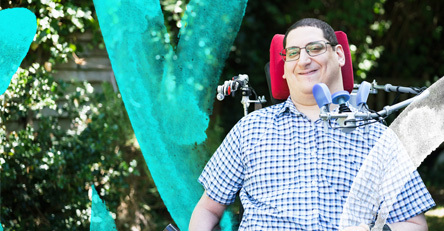
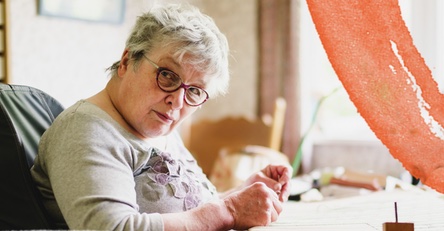


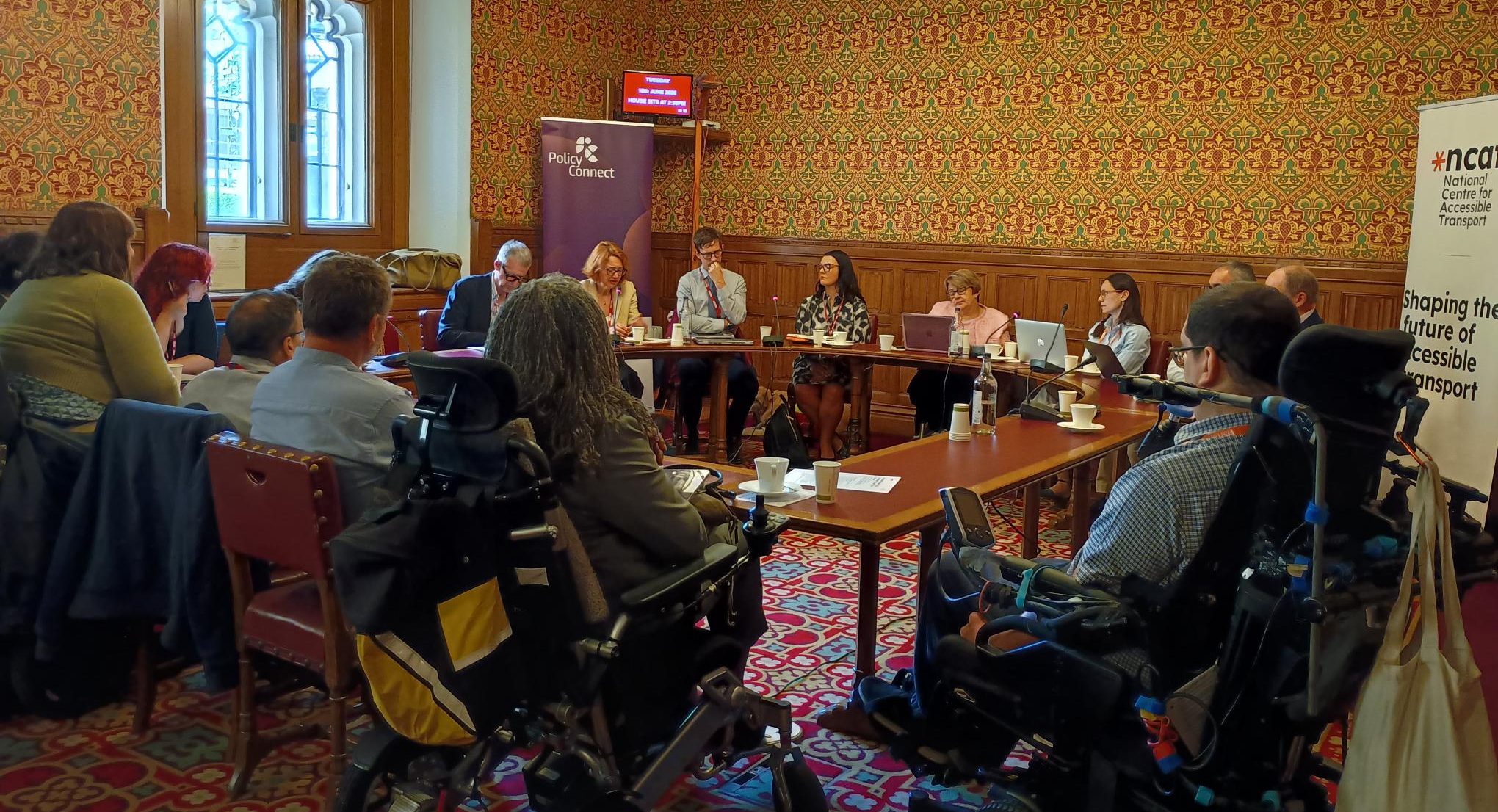
On Tuesday 16 June, Emma and Denise took part in a roundtable discussion at the House of Lords, chaired by Baroness Grey-Thompson DBE, Chair of the Accessible Transport Policy Commission, focusing on Accessible Transport Policy.
Accessible transport is not a luxury, it is fundamental to independence, inclusion, and autonomy. Our ability to move from A to B underpins nearly every aspect of daily life: leaving the house, socialising, attending medical appointments, meeting friends, and accessing education or employment. Yet, accessible transport cannot be taken for granted.
For many people, barriers to transport are a daily reality. These challenges take many forms: difficulties obtaining a Blue Badge or a subsidised bus pass; inaccessible train stations; bus drivers unfamiliar with operating ramps; pre-booked assistance that fails to arrive; and a shortage of accessible parking bays.
Many of these issues were raised during the roundtable, including a critical discussion around “The Right to Transport” and the reluctance many people feel when it comes to lodging complaints. This hesitation often stems from systems that are complex, difficult to navigate, and, too often, unresponsive.
The discussion brought together a wide range of organisations representing the disability community, each sharing the lived experiences of their members. It was a dynamic and insightful exchange that underscored the urgent need to improve transport accessibility. Crucially, it highlighted the importance of recognising diverse needs—considering not only different types of disabilities, but also how disability intersects with other factors such as gender, health, and ethnicity.
This roundtable forms part of a broader series of events organised by Policy Connect in the context of the Law Commission’s review on “Accessibility of Transport for Disabled People”. Commissioned by the Department for Transport, the review began in March and will continue over the next three years. The Law Commission is committed to engaging with a wide of stakeholders, especially people with disabilities, to better understand how the current legal framework shapes real-life experiences.
At UP, we believe this review and its consultation process offers an opportunity for our community to be heard and drive change. It is a chance to share our experiences, highlight the barriers we face, and contribute to shaping inclusive solutions for the future of transport.