




“Every specialist starts with ‘I’m not an expert in CP, but…’ and then tells me something that’s completely wrong.”
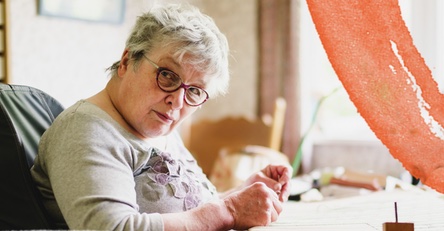
Anna Scutt, a 49-year-old actor from Cornwall, isn’t afraid to speak truth to power. Living with cerebral palsy (CP), Anna has spent her life navigating not only the physical challenges of her condition, but the systemic ignorance and indifference of the institutions meant to support her.
Diagnosed at just two and a half with spastic diplegia, Anna’s early childhood was marked by confusion and dismissal. “My parents knew something wasn’t right,” she says. “I wasn’t crawling, sitting up, rolling over. But every time they raised concerns, they were told they were being paranoid.”
This pattern of dismissal-from early doctors and therapists-set the tone for what would become a decades-long struggle for recognition, dignity, and proper treatment.
A Health System That Didn’t Listen
Through her childhood and into early adulthood, Anna endured countless therapies and surgeries-none of which improved her condition. “They just didn’t work,” she says plainly. “And now we know that a lot of what was done in the ’70s, ’80s, and ’90s for people with CP wasn’t evidence-based. They just didn’t understand it.”
At university, Anna began experiencing severe back pain-pain that would continue, largely untreated, for over 20 years. Doctors attributed it to overexertion or said it was all in her mind. Solutions came in the form of escalating prescriptions, not proper diagnosis or specialist referrals.
It wasn’t until she was in her early 40s that she finally saw a CP-informed specialist in Cornwall. “He looked at me, looked at the list of medications I’d been put on, and said, ‘They’re treating everything except what’s actually wrong.’” He prescribed a specific muscle relaxant that worked almost instantly.
“I was finally out of that torturous pain,” Anna says. “And that medication had been around since the 1970s. It just took someone who understood CP to get it right.”
Acting Through Adversity
Outside the medical maze, Anna has carved out her own space as a creative force. As an actor, she brings authenticity, wit, and depth to every role, letting her lived experience inform her performance. The acting world, unlike the healthcare system, is actively making room for disabled people.
“Acting gives me a voice,” she says. “I’m seen for who I am and what I can do, rather than as a problem that can’t be fixed.”
The Clash of Conditions
In recent years, Anna faced a new complication. After her specialist retired during the COVID-19 pandemic, a new doctor-having only seen her via Zoom-decided to reduce her medication. Within weeks, the severe back pain returned, more intense than ever. Although it’s mostly back under control, soon after its return, she developed symptoms later diagnosed as bladder pain syndrome-another chronic condition that frequently contradicts what her CP body needs.
“Anything that helps my CP flares up the bladder pain, and vice versa,” she explains. “It’s like the two conditions are at war inside my body.”
And still, Anna endures. She learns. She advocates. She educates.
A Voice in a Growing Movement
Anna’s story is part of a larger truth: there are more than 130,000 adults with cerebral palsy in the UK, and most of them are left without any consistent, informed care. Too often, CP is still treated as a childhood condition. But Anna-alongside others in the UP Movement-is helping to change that.
“If people like us don’t speak out, no one else will,” she says. “We’ve been forgotten for too long.”
Her honesty, grit, and commitment to telling it like it is make Anna a vital voice in the growing network of CP advocates. And for young people with CP looking ahead to adulthood with uncertainty, her story offers something rare and powerful: reality, resilience, and hard-won hope.