

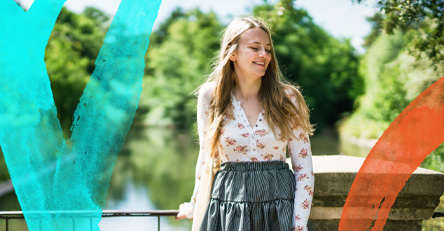
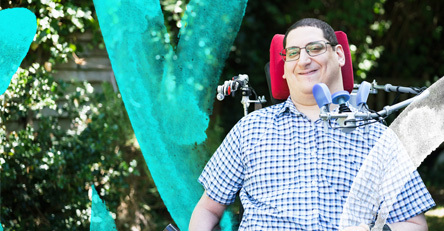


For Hannah, stepping into the role of Nora in Audrey was more than just another acting job—it was a statement. “This is my first feature film role and only my second acting role ever,” she shared. Before this, she had appeared in Latecomers, a digital mini-series about two people with cerebral palsy navigating an unexpected night together after their carers hook up at a bar. “I’ve always been a drama kid, always loved being on or near a stage, but as I’m sure you know, the representation of disabled people in media is so slim that acting didn’t feel like a viable option. Yeah, now I’m kind of making it.”
Representation in Media: A Long Way to Go
Hannah is keenly aware of the state of disability representation in film and television. While shows like Sex Education and Heartbreak High have made strides, it’s still rare to see authentic portrayals of disabled characters. “That’s some of the best representation I’ve seen and some of the only representation I’ve seen that feels okay,” she said, reflecting on Sex Education. “There’s a really, really beautiful autistic character in Heartbreak High. But like you said, the representation has kind of been on the ground, and it’s in recent years that we’ve started to see it be a bit more fleshed out.”
Filming Audrey: New Challenges, New Opportunities
When Audrey began filming in early 2023 on the Gold Coast, it marked a significant moment in Hannah’s life. “It was my first time living away from home, which is something that I had always wanted to try, but because of accessibility and the complexities of cerebral palsy, I’d never sort of figured out quite how that was going to work.” With the help of carers and support workers, she made it happen. “Now I travel a lot for work. So my relationship with my home is very different.”
Hannah also took the opportunity to share her personal experience with cerebral palsy: “I’m sitting in a wheelchair. I have issues with things like getting into bed on my own, going to the bathroom, getting dressed. So all those like living skills are really hard for me.” She recalled what doctors told her parents when she was diagnosed: “They were told, thanks to the level of brain damage that I had sustained, that I would never walk, talk, or feed myself. Obviously, by virtue of us having this conversation, that didn’t come to pass. Thank you, early intervention, which helped a great deal.”
Turning Disability Narratives on Their Head
What drew Hannah to Audrey was how it approached disability with humour and honesty. “The way we treat disability in that film is quite absurd,” she explained. “Nora is very much the forgotten child in her family, fighting for the parents’ attention. It was really fun to sort of turn the stereotype on its head because, obviously, often out of necessity, disabled children are given slightly more attention… That is not Nora’s experience.”
One scene in particular stood out to Hannah: “After Audrey has fallen into a coma, her dad finally gets around to fixing the bathroom doors so that she can fit through it properly. And she just turns to him and says, ‘I’m so glad that it’s taken like 15 years of my life and for my older sister to end up in a coma for me to gain adequate access to the bathroom. Like, thank you so much.’”
Hannah related this moment to real life, laughing about how families often only make accessibility changes when it suits them. “I was watching that scene, and I was like, that happened to me!” she said. “We never had a handrail until I moved out and my grandparents got older.”
Advocacy, Accessibility, and the Future
While Hannah is passionate about acting, she’s also invested in improving accessibility in the industry. She recently had her first experience working with an access coordinator. “That’s a person who… takes care of your access needs. It’s their job to figure out how you’re going to go from location to location, how you’re going to go to the bathroom, or make sure your schedule fits you.” She emphasized how vital this role is. “When you’re trying to learn lines and doing all of that, and then you have to also be constantly advocating for your needs, that’s an extra job in itself.”
For Hannah, using humour and storytelling to challenge perceptions is a key part of her journey. “Nora definitely says what’s on her mind more easily than I do,” she admitted. “I’m a little bit more of a people pleaser and polite, but in terms of approaching my life with that same kind of humour and sarcasm, that’s definitely how I do things. It’s a coping mechanism, I think.”
As more films and shows start embracing authentic disability representation, actors like Hannah are paving the way—not just by being present, but by changing the narrative itself. “I might have to do things a different way… but I’m doing it.”
Audrey is on UK and Ireland digital platforms now
Watch on Amazon : https://www.amazon.co.uk/Audrey-Natalie-Bailey/dp/B0D8V1XDW1